

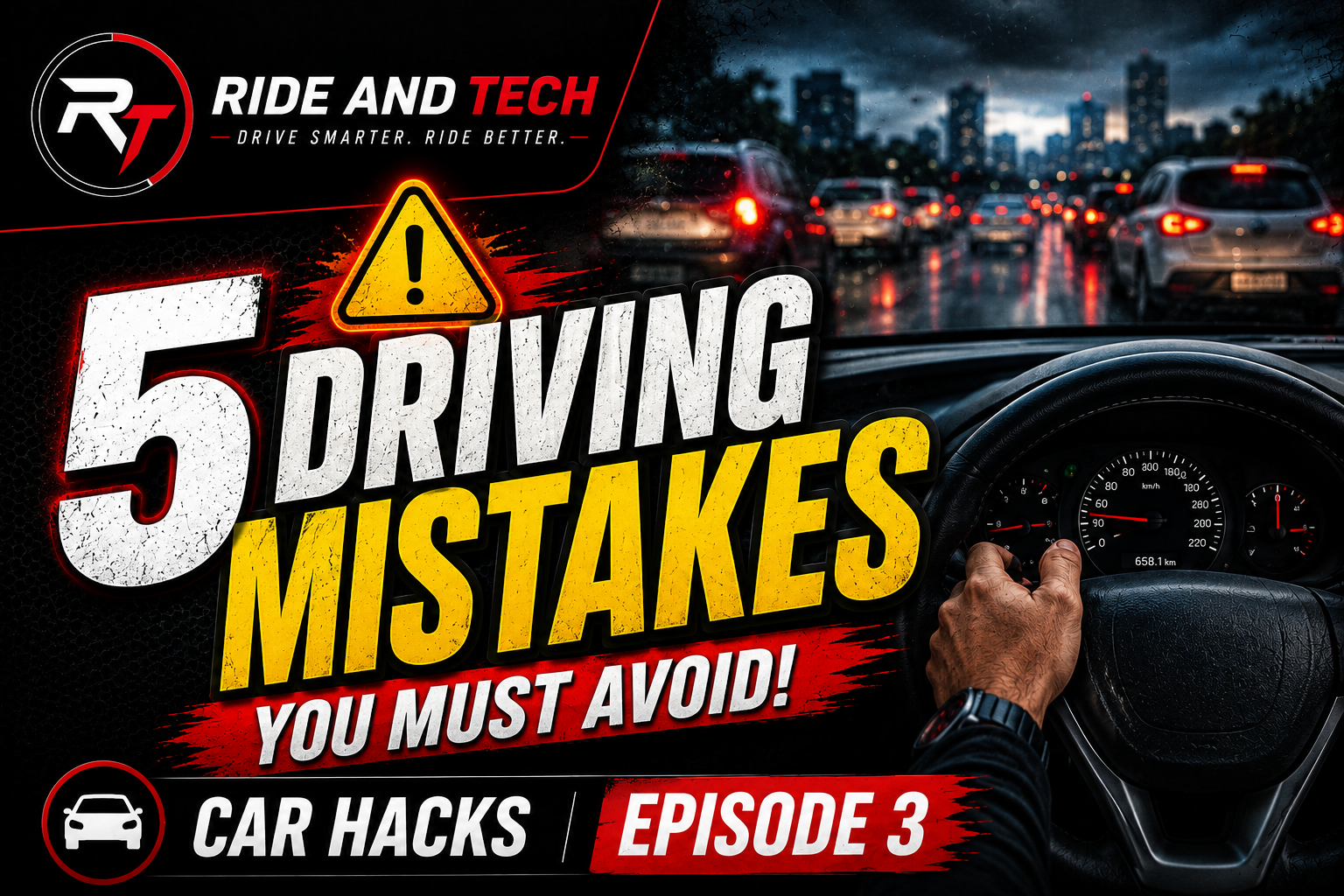
The monsoon season brings much-needed relief from scorching temperatures, but it also creates some of the most challenging driving conditions of the year. Heavy rainfall, slippery roads, poor visibility, waterlogged streets, and sudden braking situations can quickly turn an ordinary drive into a dangerous one. Understanding the most common monsoon driving mistakes can help drivers stay safe and avoid expensive vehicle repairs.
Unfortunately, many drivers unknowingly make mistakes during the rainy season that not only increase the chances of accidents but can also lead to expensive vehicle repairs. The good news is that most of these problems are completely avoidable with proper preparation and safe driving habits.
Whether you drive daily through city traffic or frequently travel on highways, avoiding these common monsoon driving mistakes will help keep both you and your vehicle safe throughout the rainy season. Let’s look at the five common monsoon driving mistakes every driver should avoid during the rainy season.
1. Driving Through Deep Water
One of the biggest mistakes drivers make during the monsoon is attempting to drive through flooded roads without knowing the actual water depth. A road that appears to have only a few inches of water may hide deep potholes or flooding that can seriously damage your vehicle.
Modern cars contain complex electrical systems, sensors, ECUs, alternators, and air intake systems that are extremely vulnerable to water.
If water enters the engine through the air intake, it can cause engine hydrolock, a condition where water prevents the pistons from moving properly. Hydrolock can bend connecting rods, damage pistons, and sometimes require a complete engine replacement.
Why this is dangerous
- Engine hydrolock
- Electrical system failure
- Brake efficiency reduces after crossing water
- Damage to suspension and wheels due to hidden potholes
- Corrosion in various components
What you should do
- Avoid driving through flooded roads whenever possible.
- If you cannot avoid it, observe another vehicle of similar height first.
- Drive slowly and maintain a steady speed.
- Avoid sudden acceleration.
- Never stop in the middle of standing water.
- After crossing water, gently press the brakes several times to dry them.
Ride and Tech Tip: If the water level is above the center of your wheels, it’s usually safer to find another route.
Continue Reading
- 5 Driving Mistakes That Can Cost You Money and Damage Your Car
- 5 Driving Mistakes Most Drivers Still Make
2. Driving with Worn-Out Tyres
Your tyres are your car’s only contact with the road. During monsoon season, their condition becomes even more critical because they must maintain grip while continuously pushing water away from the road surface.
Worn tyres cannot channel water effectively, increasing the risk of aquaplaning (hydroplaning). When aquaplaning occurs, the tyres lose contact with the road and the driver temporarily loses steering and braking control.
Even advanced safety systems like ABS and Electronic Stability Control cannot fully compensate for tyres that have lost their grip.
Warning signs
- Low tread depth
- Uneven tyre wear
- Cracks on sidewalls
- Frequent loss of traction
- Longer braking distance
How to stay safe
- Inspect tyre tread before the rainy season.
- Replace tyres with excessive wear.
- Maintain recommended tyre pressure.
- Rotate tyres periodically.
- Avoid mixing different tyre types.
Ride and Tech Tip: Good tyres can significantly reduce stopping distance on wet roads and improve overall safety.
3. Ignoring Old or Damaged Wiper Blades
Visibility is one of the most important factors during rainy weather. Unfortunately, many drivers continue using worn-out wiper blades until they completely stop working.
Old wiper blades leave streaks, skip across the windshield, or fail to remove water properly. This reduces visibility, especially during heavy rain or while driving at night.
Since rubber naturally deteriorates due to sunlight, dust, and heat, wiper blades should be inspected before every monsoon.
Signs your wipers need replacement
- Streaks on the windshield
- Chattering or squeaking sounds
- Uneven wiping
- Torn or cracked rubber
- Reduced visibility during rain
Best practices
- Replace blades every 6–12 months if necessary.
- Keep the windshield clean.
- Top up windshield washer fluid regularly.
- Clean the rubber edges with a soft cloth.
Ride and Tech Tip: Replacing wiper blades is one of the cheapest safety upgrades you can make before the rainy season.
4. Driving Too Fast on Wet Roads
Many drivers underestimate how much rain affects braking performance and tyre grip.
Wet roads dramatically increase braking distance because tyres have less traction. Even if your car has ABS, driving too fast on wet roads increases the chances of skidding or losing control.
Sudden acceleration, hard braking, and sharp steering inputs can make the vehicle unstable.
Common risks
- Longer stopping distance
- Reduced tyre grip
- Increased chance of skidding
- Difficulty controlling the vehicle during emergency braking
Safe driving tips
- Reduce your speed during rainfall.
- Maintain a greater distance from the vehicle ahead.
- Brake gently instead of suddenly.
- Avoid aggressive steering movements.
- Turn on headlights during heavy rain for better visibility.
Ride and Tech Tip: Arriving five minutes later is always better than risking an accident.
5. Not Cleaning Your Car After Driving in Rain
Many drivers assume rainwater cleans the car naturally. In reality, rainwater often contains dust, pollutants, mud, and other contaminants that stick to the vehicle.
Mud accumulation underneath the vehicle can trap moisture, increasing the chances of rust and corrosion over time.
Brakes, suspension components, wheel wells, and the underbody deserve special attention after repeated exposure to rain.
Problems caused by skipping cleaning
- Rust formation
- Brake component corrosion
- Mud accumulation
- Reduced paint protection
- Premature wear of suspension parts
Best practices
- Wash your vehicle after prolonged exposure to rain.
- Pay special attention to the underbody.
- Dry door seals and rubber components.
- Apply protective wax periodically.
- Clean brake discs if excessive mud is present.
Ride and Tech Tip: Underbody cleaning during monsoon helps extend the life of suspension and chassis components.
Bonus: Common Monsoon Driving Mistakes Every Driver Should Avoid
Besides avoiding these common mistakes, follow these simple precautions:
✔ Check tyre pressure regularly.
✔ Keep headlights, fog lamps and tail lights clean.
✔ Carry an emergency kit with a flashlight, umbrella and first-aid supplies.
✔ Avoid sudden braking and sudden acceleration.
✔ Keep your fuel tank at least half full during long trips.
Frequently Asked Questions
Is it safe to drive through flooded roads?
No. If you cannot judge the depth of the water, it is safer to avoid crossing it because deep water can cause severe engine and electrical damage.
How often should I replace my wiper blades?
Most manufacturers recommend inspecting them every six months and replacing them whenever visibility becomes poor or the rubber starts cracking.
Why do tyres lose grip during heavy rain?
Water forms a thin layer between the tyre and the road. Worn tyres cannot remove this water effectively, leading to aquaplaning.
Can rain damage my car’s engine?
Rain itself usually doesn’t damage the engine, but driving through deep water can allow water to enter the air intake, potentially causing engine hydrolock.
Should I wash my car after every rainfall?
If your vehicle has been exposed to muddy roads or standing water, washing it—especially the underbody—is highly recommended to reduce corrosion and remove accumulated dirt.
Final Thoughts
Driving during the monsoon doesn’t have to be stressful or dangerous. Most accidents and expensive vehicle repairs occur because of simple mistakes that are entirely preventable.
Avoid driving through deep water, inspect your tyres regularly, replace worn-out wiper blades, reduce your speed on wet roads, and clean your vehicle after heavy rain. These simple habits can significantly improve safety, reduce maintenance costs, and help your vehicle perform reliably throughout the rainy season.
By taking a few extra precautions before and during the monsoon, you’ll not only protect your car but also ensure a safer driving experience for yourself and your passengers.
For in-depth stories, reviews and the latest updates from the world of automobiles and technology, head over to Ride and Tech.
Copyright (c) Ride And Tech. All rights reserved.